
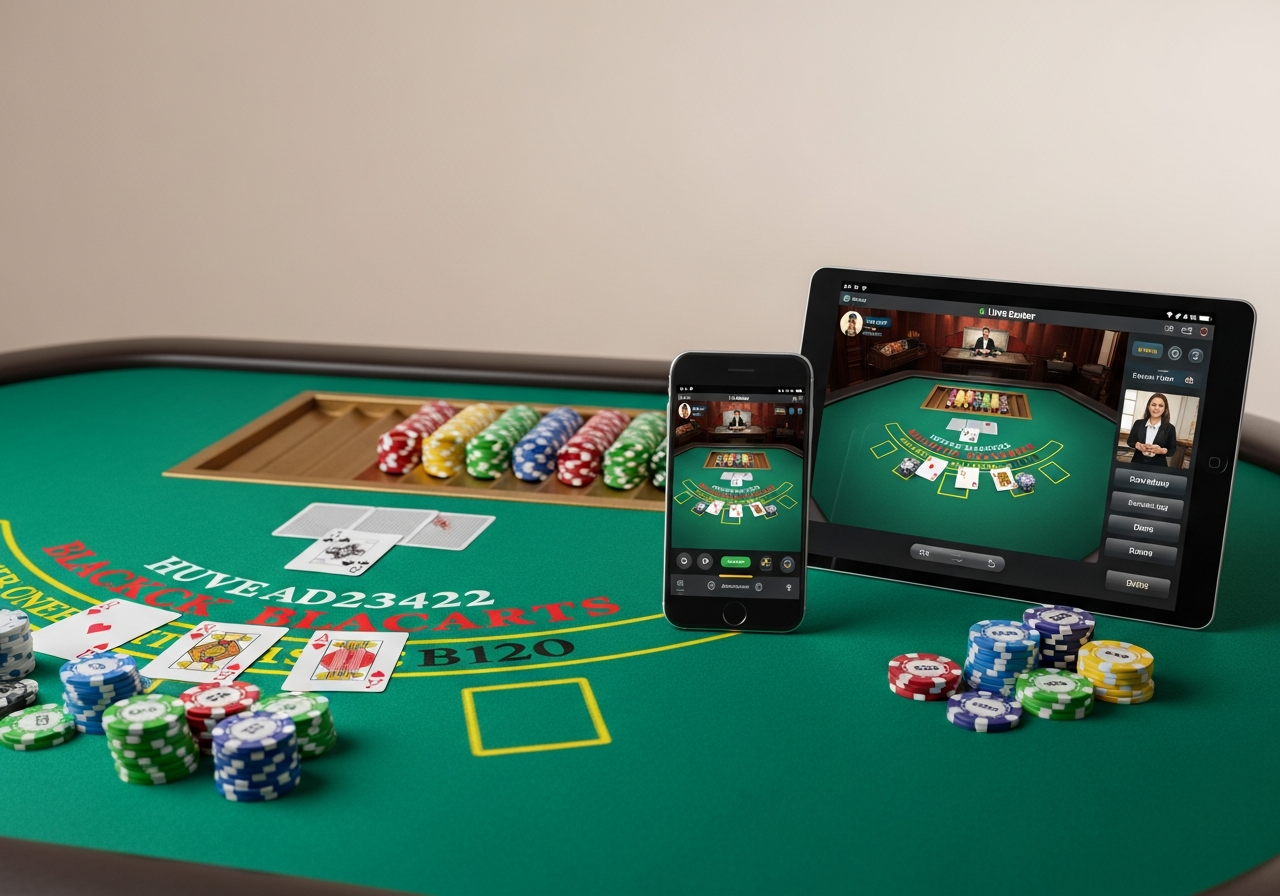
Infinite Blackjack is Evolution Gaming’s innovative “one-to-many” live blackjack format, designed to revolutionise how players experience online card games. Unlike traditional live blackjack tables where seat availability limits player access, Infinite Blackjack offers unlimited seats—meaning you’ll never wait for a spot. This makes it particularly appealing for Indian players seeking instant access to authentic live-dealer blackjack without geographic or capacity restrictions.
For Indian players specifically, Infinite Blackjack delivers several compelling advantages. The format supports lower betting minimums at many casinos, making it accessible across varied budgets and bankroll sizes. The mobile-friendly live streaming ensures smooth gameplay on Android and iOS devices. Most importantly, you get the social, immersive experience of a real live dealer without the complications of joining overcrowded tables or dealing with lengthy queue times. This guide covers real-money gameplay, rules, side bets, RTP metrics, and India-specific considerations including INR currency support, payment methods, KYC requirements, and responsible gambling practices.
What Is Infinite Blackjack and Why It Appeals to Indian Players
Infinite Blackjack represents a fundamental shift in how live blackjack scales. Evolution Gaming created this format to eliminate the friction that traditional live tables create—particularly for regions with high player volumes or emerging gambling markets. The game uses an eight-deck shoe, a professional live dealer, and consistent rule sets that align with most international blackjack standards. The dealer typically stands on all 17s (including soft 17, depending on the variant), blackjack pays 3:2, and players can split once per hand and double down on any two cards.
What sets Infinite Blackjack apart is its architecture: every player receives the same initial two cards dealt from a physical shoe, but your decisions—hit, stand, split, double, insurance—are entirely independent. If you choose to hit and another player stands, your outcomes don’t interfere with each other. This eliminates the frustration many players experience in crowded live tables where someone else’s poor decision feels like it “ruined” the hand.
How Infinite Blackjack Differs From Standard Live Blackjack
The core difference lies in scalability and decision independence. A traditional live blackjack table seats 5–7 players at one physical table; once those seats are full, new players must wait for another table or join a queue. Infinite Blackjack removes this constraint entirely. Unlimited players can join simultaneously, each viewing the same dealer and receiving identical starting cards through a virtual representation on their screen.
Critically, your choice to hit on a 12 against the dealer’s 6 does not change the fact that another player receives the same virtual card. The physical dealing happens once; the outcome is then rendered independently for each player’s decision set. This is fundamentally different from multi-player tables where a “fifth-position hitter” taking a card that “should” have gone to you creates interpersonal tension and fallacies around card flow.
Key Benefits for Indian Players
For players in India, Infinite Blackjack removes geographic and accessibility barriers. You don’t need access to physical casinos in Goa, Sikkim, or other licensed jurisdictions. Any INR-friendly online casino offering Evolution’s products gives you instant entry. The lower minimum bets (often ₹10–₹50 versus ₹100+ at some land-based venues) make the game accessible regardless of whether you’re a casual player or a serious hobbyist.
Mobile compatibility is equally crucial in India, where many players access casinos via smartphones on 4G/5G networks. Infinite Blackjack streams smoothly on smaller screens and responds quickly to touch input, essential for players in cities with variable bandwidth. The social dimension—a real dealer, live chat, and real-time action—appeals to Indian players accustomed to the communal aspects of casino visits without requiring travel.
Core Rules and House Edge of Infinite Blackjack
Understanding the exact rules and house edge of Infinite Blackjack is essential for managing your bankroll and making informed strategic decisions. The game’s RTP (Return to Player) typically ranges between 99.4% and 99.5% when playing basic strategy, translating to a house edge of around 0.5–0.6%. This is competitive with other casino table games and significantly better than slots or certain side bets.
| Rule/Parameter | Infinite Blackjack | Typical Indian Live Blackjack Table | Impact on Player |
|---|---|---|---|
| Shoe size | Eight decks | 6–8 decks | Minimal edge effect; slightly favours basic-strategy players |
| Dealer soft 17 | Stands | Varies (some hit soft 17) | Standing on soft 17 is slightly better for player |
| Blackjack payout | 3:2 | 3:2 or occasionally 6:5 | 3:2 is standard and fair; 6:5 increases house edge by ~1.4% |
| Split limit | One split per hand | Often one; rarely unlimited | Single split aligns with international standard |
| Double down | Any two cards | Any two (some exclude after splits) | Unrestricted doubling favours player value |
| Six Card Charlie | Automatic win at 21 or less | Rare; operator-dependent | Adds ~0.16% to player RTP; strong player-friendly rule |
| Insurance | Offered vs Ace upcard | Standard | Insurance typically has ~14% house edge; avoid unless card counting |
| Decks in play | ~4–6 effective | Varies | Fewer remaining decks slightly improve player odds |
The Six Card Charlie rule is a particularly important player advantage. If you draw six cards without busting (i.e., your hand total is 21 or less with six cards), you automatically win, regardless of the dealer’s final hand. This rule alone contributes approximately 0.16–0.2% to the player’s overall RTP.
Six Card Charlie and Other Player-Friendly Rules
Six Card Charlie is genuinely rare in blackjack and significantly shifts the dynamic of marginal hands. Imagine you’re holding a 12, the dealer shows a 6, and you hit: you draw a 2. You now have 14 with four cards. Most players would stand and hope the dealer busts. But under Six Card Charlie, if the dealer somehow doesn’t bust and you draw another card (say, a 4 for 18), and then you draw a sixth card without going over 21, you win automatically—even if the dealer’s final hand is 19 or 20.
This rule fundamentally changes how you approach low-total hands. Extreme hits that might normally seem irrational (like drawing on 20) remain inadvisable, but drawing on 12–16 hands becomes slightly less punishing because you have a built-in safety net. Combined with the 3:2 blackjack payout and the ability to double on any two cards, Infinite Blackjack’s ruleset is generally player-favourable compared to many modern variants that restrict doubles or split counts.
Live Gameplay Flow: Step-by-Step Experience
To get started with Infinite Blackjack, you’ll log into your casino account and navigate to the Live Dealer lobby. Select Infinite Blackjack from the available games. You’ll see a live video feed of the dealer’s studio, a betting interface, and the bet window—typically 10–15 seconds for players to place wagers. Review the table’s minimum and maximum stakes, which vary by operator. Most Indian-friendly casinos set minimums between ₹10 and ₹100 and maximums between ₹5,000 and ₹50,000 per hand.
- Log in and select Infinite Blackjack – Open your casino app or website, authenticate with your credentials, and find the Live Casino section. Tap or click Infinite Blackjack to enter the game lobby.
- Wait for the next betting round – The game runs continuous dealing rounds. You’ll join the queue for the next available hand. The betting window opens on screen, typically lasting 10–15 seconds.
- Place your bet(s) – Enter your desired wager in INR. You can also place side bets (Any Pair, 21+3, Hot 3, Bust It) if your casino offers them. Confirm and submit your bet before the window closes.
- Receive your initial two cards – The dealer deals one card to all players simultaneously, then a second card. You see both your cards and the dealer’s upcard (one visible card; one facedown card). Other players’ cards are visible on screen if you choose to watch, but they don’t affect your own hand.
- Make your first decision – Hit, Stand, Split (if you have two cards of the same rank), Double Down, or Take Insurance (if the dealer shows an Ace). Your choice is independent and only affects your own hand resolution.
- Continue playing your hand – If you hit, you’ll receive additional cards. Continue choosing hit or stand until you reach 21, bust, or decide to stand. If you split, you’ll play two hands sequentially, with separate decisions for each.
- Dealer plays out their hand – Once all players have completed their decisions, the dealer reveals their hidden card and follows fixed rules: typically hitting on 16 or less and standing on 17 or higher. The dealer’s action is identical for all players.
- Hand resolution and payout – Your hand is compared to the dealer’s. Wins pay 1:1 on the main bet; blackjack pays 3:2; pushes (ties) return your bet. Losses are deducted from your balance. Side bets (if placed) resolve independently based on their specific conditions.
Betting Actions and Dealer Behaviour
The five primary actions available during your turn are Hit, Stand, Split, Double Down, and Insurance. Hit requests another card. Stand ends your turn and locks your hand total. Split divides a pair into two separate hands, each requiring a separate bet equal to your original stake. Double Down doubles your bet and restricts you to exactly one additional card—a critical decision point that requires strategic thinking.
Insurance is a side bet offered when the dealer shows an Ace. You wager half your original bet that the dealer has blackjack. Insurance pays 2:1 if the dealer does have blackjack but loses if they don’t. Most players should avoid insurance because its long-term house edge is steep (~14%), even though it feels like a “safe” move when the dealer shows an Ace.
The dealer’s actions are entirely scripted and rule-based, removing any element of discretion. The dealer does not make strategy decisions; they mechanically follow the table’s standing rules (e.g., “stand on all 17s”). This consistency is essential for fairness and makes your own strategy calculations reliable.
Common Misunderstandings About Shared Hands
A pervasive myth in Infinite Blackjack communities claims that “planted hitters” or bots intentionally take cards to sabotage your outcomes. This is false. Your decisions are completely independent of every other player’s decisions. If you decide to stand on 16 and the dealer busts, you win—regardless of whether another player hit their 16 and received a card.
Another misconception is that the number of players at the table affects your odds. It doesn’t. The physical shoe is dealt once per round. The specific cards drawn are determined by the shoe’s contents and the sequence of dealer actions, not by the number of players watching. Infinite Blackjack’s architecture ensures that your hand resolution is isolated from all other players’ choices.
Side Bets in Infinite Blackjack and Payouts
Side bets add excitement and variance to Infinite Blackjack but come with a tradeoff: significantly higher house edges. While the main hand carries approximately 0.5–0.6% edge, side bets typically feature 2–4% or higher edges. They’re optional—you can play Infinite Blackjack indefinitely using only the main hand—but understanding them helps you make informed decisions about where your money goes.
| Side Bet | Condition | Typical Payout Range | Risk/Reward Notes |
|---|---|---|---|
| Any Pair | Your first two cards form a pair (any suits/ranks match) | 5:1 to 8:1 | ~7% house edge; hits roughly once per 2.4 hands |
| 21+3 | Your first two cards plus dealer’s upcard total 21 or match a poker hand (flush, straight, three-of-a-kind) | 3:1 to 100:1 (trips/flush) | ~3.2% house edge; rewards Ace-heavy hands |
| Hot 3 | Player’s two cards plus dealer upcard create specific high-value combinations (three-of-a-kind pays highest) | 30:1 to 100:1 | ~3–4% house edge; highly volatile |
| Bust It | Dealer busts on a specific number (e.g., dealer bust on exactly 22) | 2:1 to 20:1 (varies by dealer bust number) | ~4–6% house edge; outcome entirely dependent on dealer’s play |
Side bets are seductive because they promise large payouts. A ₹50 bet on “Any Pair” hitting an 8:1 payout feels thrilling when you win ₹400. But across 100 hands, you’ll lose money due to the house edge. These bets are entertainment value with a measurable cost; treat them as such.
Should Indian Players Use Side Bets?
For bankroll-conscious players—a majority of Indian casual gamblers—side bets are a luxury, not a necessity. If your session budget is ₹1,000 and you bet ₹50 on the main hand plus ₹25 on a side bet, you’re effectively dedicating 2.5% of every round to a higher-edge wager. Over 20 hands, that difference compounds meaningfully.
The strategic recommendation is simple: play side bets only if you’re comfortable with the higher variance and can afford the extra house edge. If you’re focused on longevity and steady entertainment, stick to the main hand and basic strategy. If you enjoy the thrill of long-shot payouts and understand that you’re paying for that entertainment via edge, side bets can enhance your experience—just don’t confuse them with winnable strategies.
Basic Strategy and Practical Tips for Indian Players
Basic blackjack strategy is a mathematically optimal set of decisions designed to minimise the house edge. When the dealer stands on all 17s (as in Infinite Blackjack), basic strategy remains highly effective and is relatively simple to memorise or reference during play.
- Hard 17 and above: Always stand. If your hand totals 17 or more without using an Ace as 11, you’ve already achieved a solid total. The risk of busting far outweighs the probability of improving.
- Hard 12–16 vs dealer 2–6: Usually stand. The dealer is in a weak position (2–6 is a “bust card”). Most hands in this range will win if the dealer busts, so avoid the temptation to hit.
- Hard 12–16 vs dealer 7–Ace: Usually hit. The dealer’s upcard is strong. You need to improve your hand; the risk of busting is lower than the certainty of losing if you stand.
- Soft 17 (Ace + 6) or lower: Always hit. Because one of your cards is an Ace counted as 11, hitting won’t cause you to bust. You’re essentially drawing for free until you reach 17 with all tens.
- Soft 18 vs dealer 9–Ace: Hit. Although 18 is a strong hand, the dealer’s strong upcard means you’re likely beaten already. Hitting gives you a chance to improve without bust risk.
- Pairs: Split 8s and Aces always; split 2s–7s vs dealer 2–7; never split 10s or 5s. Splitting 8s (16 total) against any dealer card gives you two chances at strong hands. Splitting Aces gives you two shots at blackjack. Splitting 10s or 5s sacrifices value.
- Double down on 11 always; on 10 vs dealer 2–9; on 9 vs dealer 3–6. Doubling concentrates your advantage in situations where the math favours it most.
- Never take insurance. Insurance’s ~14% house edge makes it a perpetual money-loser, even when the dealer has blackjack frequently.
For Indian players specifically, the emphasis should be on bankroll discipline. If your daily budget is ₹2,000, split it into 20–40 hands to avoid all-in situations. If you lose your session budget, stop playing—don’t chase losses by depositing more. This is especially important because live blackjack moves quickly; a tilted player can burn through a budget in minutes.
Adapting Strategy to Six Card Charlie and Infinite Mechanics
Six Card Charlie subtly shifts marginal decisions on low totals. Normally, hitting on a hard 12 against a dealer 4–6 is borderline; Six Card Charlie slightly favours hitting because you have a built-in safety net if you reach six cards without busting. However, for most players, standard basic strategy charts remain excellent guides. The Six Card Charlie advantage is modest (roughly 0.16% added to overall RTP), and deviating dramatically from basic strategy in hopes of triggering it will cost more money than it gains.
The independent-decision nature of Infinite Blackjack actually makes strategy discipline easier. You don’t have to worry about a sixth-seat player’s irrational hit disrupting a favourable dealer bust. You play your hand optimally according to the chart, and outcomes depend on mathematics, not on table politics.
Common Mistakes by New Indian Players
New players often fall into predictable traps. Overusing insurance is perhaps the most expensive mistake; many players take insurance “just to be safe” when the dealer shows an Ace, not realising they’re making a 14% negative-EV bet on most occurrences. Emotional betting after bad beats causes players to increase stakes to “recoup losses,” exponentially worsening their position. Misreading dealer upcards—treating a 7 as a weak card when it’s actually strong, or vice versa—leads to poor hit/stand decisions. Assuming other players’ choices affect your results creates unnecessary anxiety and can tempt you to deviate from optimal play based on perceived table dynamics.
Additionally, Indian players often underestimate the speed of live blackjack on mobile. The betting window closes quickly; indecision costs you hands. Pre-decide your strategy before each round so you can act with confidence when the decision point arrives.
Choosing INR-Friendly Casinos Offering Infinite Blackjack
Not every online casino offers Infinite Blackjack, and not every casino that does offers optimal conditions for Indian players. Evolution Gaming produces Infinite Blackjack, so any licensed Evolution partner can theoretically host it. However, availability depends on the casino’s localised lobbies and the operator’s commercial agreements with Evolution.
| Criteria | Global Live Casino | India-Focused Casino/App | Why It Matters |
|---|---|---|---|
| Infinite Blackjack availability | Usually present | Often present via Evolution partnership | Not all casinos license the full Evolution portfolio |
| INR currency support | Minimal or no INR | Primary currency is INR | Avoids unfavourable USD conversion fees |
| Deposit methods | Credit cards, e-wallets, wire transfers | UPI, IMPS, NetBanking, e-wallets, cards | Indian payment methods are faster and cheaper |
| Withdrawal timelines | 2–7 business days | Often 24–48 hours for Indian methods | Faster access to your winnings matters for cash flow |
| KYC documentation | Passport, driver’s license | Aadhaar, PAN, voter ID accepted | Indian ID is simpler and universally recognised |
| Customer support language | English, sometimes others | Hindi, regional languages often available | Dispute resolution is faster in your language |
| Bonus promotions | Generic welcome bonuses | India-specific promos (Diwali, festivals) | Tailored offers often provide better value |
| Mobile app optimisation | Generic UI | India-optimised app performance, data-light modes | Critical for 4G networks and smaller data plans |
Banking Options and KYC for Indian Players
Most India-friendly casinos accept UPI (Unified Payments Interface) for deposits, which is instantaneous and fee-free. IMPS (Immediate Payment Service) and NetBanking (direct bank transfers) are also common. Withdrawals typically process to the same method within 24–48 hours. Some casinos also accept debit/credit cards and e-wallets like Paytm or Skrill.
KYC (Know Your Customer) verification usually requires a valid Indian government ID, a selfie, and proof of address (utility bill, Aadhaar letter). The process typically takes 24–48 hours; some casinos verify instantly. Ensure the casino is transparent about which documents they accept and whether verification delays will impact your play. Always use casinos that clearly display their licensing information and terms; avoid apps that request unusual documentation or lack transparent policies.
India-Specific Legal and Responsible Gambling Considerations
Gambling laws in India vary significantly by state. Goa, Daman, and Sikkim have licensed casinos; most other states prohibit land-based gambling. Online gambling exists in a legal grey area: no national law explicitly permits or forbids online casinos, but some states have enacted legislation implicitly restricting them. Many Indian players use offshore-licensed operators because they’re accessible, offer INR support, and operate under international regulation (e.g., Malta, Curacao, Philippines).
- Understand your state’s laws. Goa residents have access to licensed land casinos; others typically rely on offshore operators. Do not assume nationwide legality; research your specific state’s regulations.
- Use regulated operators with transparent licensing. Legitimate casinos display their license number and regulatory authority. Avoid unregulated apps that lack this transparency.
- Recognise that fast-paced live blackjack can create addiction risk. Sessions can move quickly, especially on mobile. Set firm betting and time limits before you start.
- Utilise casino-provided responsible gambling tools. Most operators offer deposit limits (daily, weekly, monthly), loss limits, time-out windows, and self-exclusion options. Use them proactively, not reactively.
- Keep deposits and losses separate from essential funds. Never gamble with money allocated for rent, food, utilities, or emergencies.
- Avoid chasing losses. If you’ve lost your session budget, close the app. The mathematics won’t change; losses chasing only accelerates larger losses.
Differences Between Online Infinite Blackjack and Indian Land Casinos
Physical casinos in Goa, Daman, or Sikkim may use house rules that differ from standard Infinite Blackjack. Some tables feature antes (a mandatory bet before cards are dealt) instead of traditional betting, or use different payout structures for blackjack (occasionally 6:5 instead of 3:2). These house rules can increase effective house edge by 1–2% compared to Evolution’s 0.5–0.6%. Online Infinite Blackjack, operating under standardised Evolution rules, is mathematically more favourable. Additionally, land casinos often involve higher minimum bets (₹500+), while online minimums often start at ₹10–₹50, making online play more accessible.
Setting Limits and Recognising Risk Signals
Before each session, decide your time limit (e.g., 30 minutes) and your loss limit (e.g., “I will stop if I lose ₹500”). Set deposit limits in your casino account to enforce this automatically. Casino apps typically allow you to set daily, weekly, and monthly limits that block further deposits once exceeded.
Risk signals include playing faster than you intend, betting above your predetermined limits, chasing losses with larger bets, or playing at times when you’re emotionally vulnerable. If you notice these patterns, use your casino’s time-out feature (typically 24 hours to 6 months) or self-exclusion (permanent) option. India also offers the National Problem Gambling Council and similar resources; seek help if gambling begins affecting your life.
Device, Streaming Quality and Live Dealer Experience
Infinite Blackjack streams in HD (typically 720p–1080p) from Evolution’s studios via secure RTMP or HLS protocols. Your view includes the live dealer, cards being dealt in real-time, and an on-screen betting interface overlaying the video. The typical layout shows the dealer and table on the right, betting controls on the left, and a chat box (where you can interact with the dealer and other players) at the bottom.
Desktop play offers the best video quality and responsiveness. Mobile play (portrait orientation on phones, landscape orientation on tablets) compresses the UI to fit smaller screens but remains fully functional. The betting window typically occupies a prominent position, and tap-to-select is responsive on most modern devices. Most casinos optimise for iOS (App Store) and Android (Google Play or direct APK), with web-based play also available via browsers.
Playing Infinite Blackjack on Mobile in India
Mobile play in India requires stable internet—4G/5G or reliable WiFi. Live video streaming consumes approximately 100–300 MB per hour, depending on video quality. Some operators offer a “low-bandwidth” mode that reduces video quality to preserve data. The app typically keeps you connected even if your internet briefly drops; rejoining is seamless as long as you reconnect within the hand’s timeframe.
Portrait orientation maximises visibility of the video feed but compresses betting controls. Landscape orientation (available on most phones) provides better UI spacing, making it easier to tap buttons quickly during rapid betting windows. Tablets (iPad, Samsung Galaxy Tabs) offer the best mobile experience due to larger screens. Test the app on your device before playing for real money to ensure responsiveness and comfort.
Bonus Offers and Promotions for Infinite Blackjack
Live casino bonuses vary widely. A common structure is a deposit match (e.g., “100% up to ₹5,000”) with a wagering requirement (e.g., “play 35x the bonus amount on eligible games”). Infinite Blackjack typically contributes at a reduced rate (50% or 10%) towards wagering requirements compared to slots (100% contribution), meaning bonuses clear slower on live games.
| Bonus Type | How It Applies to Live Blackjack | Typical Wagering | Key Caveats for Indian Players |
|---|---|---|---|
| Welcome/Deposit Match | Usually eligible; lower contribution rate (25–50%) | 30–50x bonus amount | Can take weeks to clear if playing live blackjack |
| Cashback | Refund of losses on specific games | Often 1–7 days required play | May be restricted to specific payment methods |
| Free Bet Credits | Bonus funds for live blackjack only | Often no wagering; use once then removed | Redeemable on specific blackjack tables only |
| VIP/Loyalty Rewards | Points earned per rupee wagered, redeemable for cash/bonuses | Cumulative based on tier | Blackjack often earns points slower than slots |
| Festival Promotions (Diwali, Holi, Eid) | India-specific bonuses during major holidays | Varies; often 50–100x wagering | Most generous for Indian players; plan around festival dates |
Maximising Value Without Overbetting
The key to using bonuses wisely is resisting the urge to chase bonuses into losses. If you have a ₹5,000 bonus with 35x wagering on Infinite Blackjack, that’s ₹175,000 in required action. Spread this over 350 hands at ₹50 per hand (a moderate bet) rather than 70 hands at ₹250. Smaller bets reduce variance and lower the risk of busting your bankroll before clearing the bonus.
Additionally, bonuses should extend your entertainment time, not incentivise riskier behaviour. If you’d normally bet ₹50 per hand, stick to that even with a bonus. Don’t increase bets simply because “bonus money” is at stake; it’s your money now, and the same bankroll rules apply.
Advanced Considerations: Fairness, RNG Elements and Myths
Infinite Blackjack uses a physical shoe—no Random Number Generator (RNG) for card outcomes. A human dealer shuffles a real deck and deals real cards. However, the physical dealing process is combined with a software layer that renders the cards on your screen and manages side-bet logic. This hybrid approach has led to unfounded conspiracy theories, so clarity is essential.
- The physical deal is real. Millions of dollars of regulatory oversight ensure that the dealing process is fair. Evolution is licensed by multiple authorities (UK Gambling Commission, Malta Gaming Authority, Sweden, others) and subject to regular audits.
- “Planted player” theories are false. Each player’s decisions are independent. There is no algorithmic system secretly adjusting outcomes based on table size or player behaviour.
- The house edge is structural, not biased dealing. Infinite Blackjack’s ~0.5% edge comes from the rules themselves (e.g., dealer plays last, blackjack payout of 3:2, specific stand/hit rules), not from dealer bias or hidden algorithms. This edge exists before any hand is dealt.
- Card counting is ineffective in live formats. While theoretically possible, card counting in live blackjack faces practical obstacles: continuous shuffling in some variants, slow dealing speed reducing advantage value, and casinos banning known counters. For casual players, card counting is irrelevant.
- RNG elements exist only for side bets. Main-hand outcomes depend entirely on the physical shoe. Side bets may use software randomisation for edge-case outcomes, but this is transparent and licensed.
What Indian Players Should Check for Game Integrity
When selecting a casino offering Infinite Blackjack, prioritise these integrity markers: Licensed operator – Verify the casino displays a valid license number from a recognised authority (Malta, UK, Sweden, Curacao, etc.) on their site. Evolution partner status – Confirm the casino is an official Evolution Gaming partner; this ensures you’re not using a clone or fake interface. Transparent terms – Clear terms about RTP, house edge, bonus wagering, and payout timelines demonstrate professionalism. Responsive customer support – If issues arise (failed withdrawal, disputed bet), rapid support in your language is critical. Positive player reviews – Reputable forums and review sites often highlight scam operators; use these as negative indicators.
Avoid casinos requesting unusual documentation (original passport photos, screenshots of personal IDs) or lacking clear legal information. Trust your instincts; if an operator feels sketchy, numerous alternatives exist. Your safety and fairness are worth the extra due diligence.